
bkg-interne

Performance Audit

Meta Ads

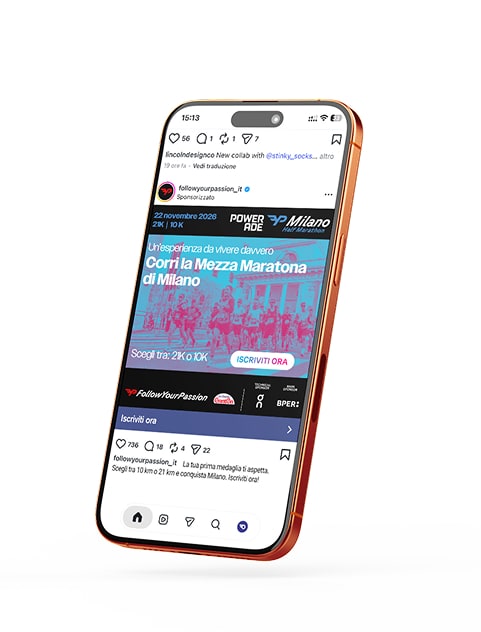
Advertising on Facebook and Instagram is not a matter of boosting a post. Meta Ads is an ecosystem in which every element has a bearing on results. When strategy, creative and targeting work coherently together, it becomes an effective channel for acquiring customers, increasing sales and consolidating brand presence.

Consultancy for Meta Ads campaigns

We work alongside companies to define and optimise their campaigns on Facebook and Instagram, acting on structure, budget allocation and performance analysis. The aim is to build an advertising system that is sustainable, measurable and consistent with commercial priorities.

meta ads

The key factors behind high-performing Meta Ads campaigns

To judge the success of a Meta Ads campaign you have to start from a clear objective, consistent with the product, the service, the stage of the customer journey and the action you want. That objective then has to be translated into quantifiable metrics, such as cost per result, ROAS, CPL or other indicators relevant to the business model.

Conversion objective

(What we want the user to do)

Acceptable cost per result

(How much we can spend for each conversion)

Return on advertising spend

(ROAS, CPL or other indicators relevant to the business model)

Without a concrete, achievable objective, there is no reliable yardstick for measuring the results obtained.

pubblico

The target audience

Every Meta Ads campaign starts from an understanding of the audience. We analyse demographic characteristics, interests, behaviours, doubts, desires and solutions already tried, so as to develop more relevant messages and creative angles.

Meta makes it possible to work with profiled audiences, lookalike users and people who have already interacted with the brand, choosing the setup best suited to the objectives.

The structure of Meta Ads campaigns

The structure of the campaign determines how the algorithm distributes the budget and optimises results. Objective, ad sets and learning phase have to be consistent with one another, avoiding configurations that are too fragmented.

Too many ad sets competing with each other disperse the budget and slow down data collection. Every setting therefore has to be assessed as part of the whole, in the light of the expected return.

Every setting therefore has to be assessed as part of the whole, in the light of the expected return.

Copy and creative

Copy and creative have a direct bearing on performance: the algorithm can optimise distribution, but it cannot make up for an ad that is not relevant or that fails to attract attention.

A good ad addresses the user’s need, communicates clearly, offers an explicit CTA and is tested in several variants in order to identify the most effective combinations.

Tracking

Without precise tracking, it is impossible to understand what converts, where to act and what the real return on investment is. Conversions and events therefore have to be configured correctly.

Accurate tracking also allows Meta to recognise the users most likely to act and to optimise the distribution of ads towards the most relevant audience.

tracciamento-cookie

Data analysis and optimisation

Launching a campaign is only the beginning. The work continues with ongoing analysis of the performance of the ads on Facebook and Instagram and with data-driven decisions based on the results.

Meta’s data needs to be set alongside the information gathered on the site, particularly when some conversions are not tracked correctly because of Consent Mode V2. Only by combining the different sources is it possible to assess the real impact of the campaigns.

The stages of our Meta Ads consultancy

We apply a working process structured into clear phases, designed to optimise the budget and to make creative and data talk to each other. This approach lets us manage Social Ads methodically, from defining the strategy through to analysing performance.

Before launching campaigns in Meta Ads Manager, we analyse the dynamics of the business, the target audience and the objectives in depth. We examine the market, the competitors and the audience in order to build a strategy on solid foundations.

On the basis of that analysis, we define the strategy: the number of campaigns to run, how the budget is divided, the choice of initial communication angles and the timeline for updating the creative. All of it is set against the objectives and KPIs of your Meta Ads.

Before publishing a campaign, we check that the tracking is correct and complete. If it is not in place, we install it through Google Tag Manager. If it is already there, we make sure it is clean and works properly against the objectives that have been set.

For every communication angle identified during the analysis stage, we propose creative and variants of the text — headlines, descriptions, primary text — in line with the brand guidelines. An approval step is built in before publication: if necessary, we run a round of revision and brainstorming together.

We monitor the campaigns regularly, cross-referencing Meta’s data with Google Analytics 4 and, where relevant, with on-site and off-site data, for an accurate reading of real performance. Data-driven optimisation is an ongoing process: analysis, hypothesis, testing, validation.

We send a regular report with all the main campaign metrics and progress against the objectives set. Every report includes commentary to help interpret the data and guidance on the actions to take.

They have chosen us

Frequently asked questions

There is no universal figure. The budget depends first of all on the objective and on the sector. A sensible choice is based on calculating the minimum number of events needed to get past the learning phase. When the available budget is below the ideal threshold, we adopt specific strategies to get out of the learning phase as efficiently as possible even so.

It depends on the maturity of the account, on the sector and on how strong the offer is. As a general rule, the first two to four weeks go on the learning phase of the algorithm. The first concrete results are typically assessed between the first and the second month. A solid strategy begins to show its full potential after two or three months of continuous optimisation.

For most businesses, yes. Meta Ads is particularly effective for e-commerce, lead generation, events and brand awareness. It works less well for B2B products with long sales cycles or for niche markets with very small audiences. During the preliminary stage of our Meta Ads consultancy, we give you an honest assessment of whether Meta is the right channel for your objective, or whether it makes sense to pair it with other tools.

No: our Facebook Ads and Instagram Ads consultancy covers the advertising campaigns, while organic management is a separate service. This distinction makes it possible to structure the two services independently, activating only what is consistent with the objectives. If you are also interested in organic content management, you can find out more on this page.

Still have questions?

Contact our experts for further details

Contact

    * Required fields