
bkg-interne

Data & Analytics

Client-side and server-side tracking

Measuring interactions on the site precisely is the starting point of any effective marketing strategy. Without reliable tools for tracking user behaviour, decisions on advertising budgets and campaigns rest on incomplete information.
Consultancy for client-side and server-side tracking

In an increasingly data-driven digital landscape, having reliable information is essential in order to assess analytics and advertising performance.

We design hybrid tracking architectures that combine client-side tracking with server-side tracking, improving the quality of the data, the control over the flow of information and the handling of privacy.

Client-side vs server-side tracking

The two systems handle behavioural data differently, but they complement each other. Combining them allows a more controlled management of the flow of information along the measurement path.

AspectClient-side trackingServer-side tracking
How it worksThe tracking scripts run directly in the user’s browser.The data is not sent directly from the browser to external platforms; it first passes through a server dedicated to managing the data flow.
Data collectionIt collects immediate information on navigation, user interactions and purchasing behaviour directly at source.The server receives the information, processes it and distributes it to the various marketing touchpoints.
Role in trackingIt is the traditional system and represents the starting point of web measurement.It strengthens control over the flow of data before it is sent to external tools.

Integrating the systems with
Google Tag Manager

To build integrated architectures, we use client-side and server-side tracking systems together, configured through Google Tag Manager. This approach keeps tracking active in the browser and strengthens it on the server side. The configuration is structured according to sound technical criteria and in line with the GDPR.

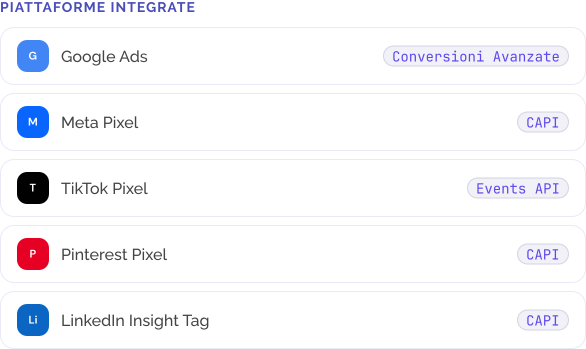
We manage the flow of data towards the main tools for tracking user behaviour, such as web analytics and advertising, synchronising the client tags with their respective server versions.

Server-side tracking

GA4 data collection through server-side tracking

How it works

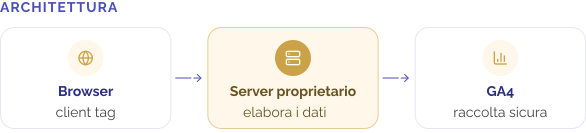
We configure Google Analytics 4 (GA4) through client-side and server-side tags for continuous, consistent data collection.
The information first passes through the proprietary server, which processes it and transmits it securely to GA4.

The benefit

The information is not sent directly from the browser to external platforms. This reduces data loss and limits discrepancies between analytics and advertising tools.

Pixel & Conversion API

Advertising
& Attribution

piattaforme

The benefits of integrated client-side and server-side tracking

In our consultancy we combine server-side tracking with the client-side tracking already in place, improving the quality of the data collected, the handling of privacy and the reliability of the information used for analysis and advertising campaigns.

More stable and accurate data

Integrating the two tracking systems reduces the signal loss caused by browser restrictions (such as ITP) or by script blocking, stabilising conversion data.

Better privacy management

The proprietary server filters the data before it reaches third-party platforms. Sensitive information (such as IP addresses) can be controlled, cleaned or anonymised, contributing to data handling that is more consistent with GDPR requirements.

Efficiency of advertising algorithms

Supplying complete, deduplicated data to channels such as Meta or Google Ads allows machine learning systems to optimise campaign delivery, improving return on investment (ROI).

Lightening the load on the browser

Moving part of the tag processing from the browser to the server reduces the JavaScript in the page, helping to keep the site fast for the user.

Our configuration method

We map your business’s measurement requirements before taking any action. We integrate server-side tracking into the infrastructure already in place, without starting from scratch.

We analyse the tags and the data layer already on your site to check the quality of the information collected at browser level.

We configure the server-side GTM container on reliable cloud infrastructure, such as Google Cloud Platform, following criteria consistent with European legislation.

We configure the flows so that client and server events are correctly synchronised. We implement the deduplication systems needed to avoid double counting in the advertising platforms.

We check that the data is transmitted correctly and that the metrics are consistent between the analytics channels and the advertising ones.

They have chosen us

Through the design of server-side and client-side tracking systems, we support B2B and B2C organisations, e-commerce businesses and international brands in improving the reliability of their data, making conversion monitoring more precise and increasing the effectiveness of their advertising campaigns.

Frequently asked questions

Client-side remains necessary in order to capture interactions on the site. Adding server-side helps manage the flow of data better in the face of growing browser limitations and technical blocks. Marketing decisions can then rest on more complete and reliable data.

No; we handle the configuration so that every event is counted only once, even when it arrives from both the client and the server channel. That means the conversion data you receive is clean and reliable, with no artificial inflation of the results.

Server-side tracking does not get around user consent. The integrated architecture respects the preferences expressed through the cookie banner and makes it possible to manage the flow of data in line with the user’s choices. Where consent is not given, the information is not used for tracking purposes that require authorisation, keeping the handling of tracking compliant with GDPR requirements.

A tracking architecture that combines client-side and server-side makes it possible to collect data that is more complete, consistent and reliable across the whole user journey. Incomplete tracking systems, by contrast, hamper campaign optimisation and performance analysis.

Still have questions?

Contact our experts for further details

Contact

Get in touch to define the most suitable path together. We analyse the starting context and identify the strategy geared to your objectives.

    * Required fields